
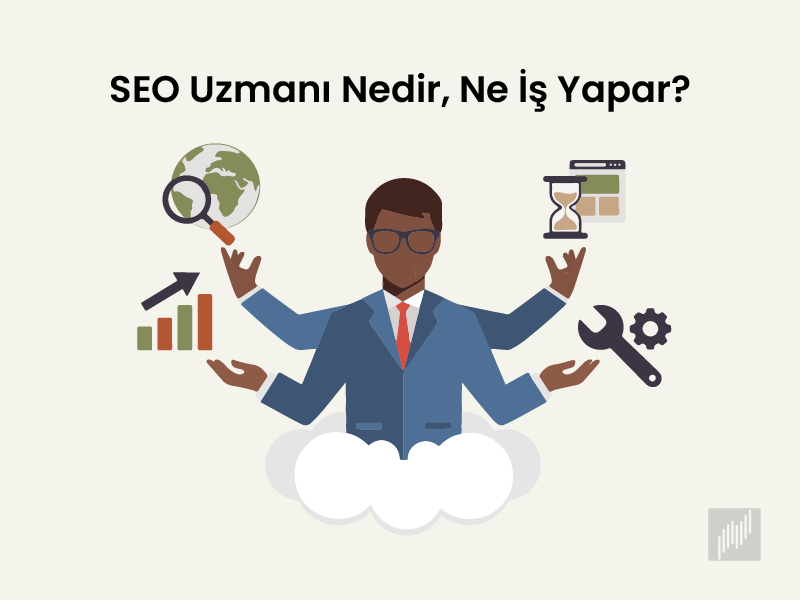
An SEO consultant is a specialist who sets the strategy that helps a website rank higher in search results and grow its organic traffic through technical and content optimization. The role covers keyword research, on-page and off-page work, technical fixes, content planning, and regular performance reporting.
Success in this field depends on current algorithm knowledge and hands-on experience. As AI-powered search reshapes what visibility means, the job now stretches beyond traditional rankings to include showing up inside AI-generated answers. Ramazan Umutlu, an SEO expert with over a decade of experience in the industry, is one example of how these responsibilities translate into practice in the areas of technical SEO, organic growth, and data analysis.

What Is an SEO Consultant and Why Do You Need One?
An SEO consultant is a professional who improves a website's organic traffic by aligning it with how search engines work. They combine on-page optimization, technical fixes, content planning, and link strategy so a site gets found by the right audience. Their goal is measurable visibility that becomes leads and sales.
The main reason businesses bring one in is competition. Millions of pages compete for a single query, so visibility rarely happens on its own. A skilled search engine optimization consultant builds a systematic strategy to earn that visibility and plans the steps that move a site ahead of its rivals.
The value of organic visibility makes this need concrete. A large share of web traffic starts with organic search, and rankings translate directly into revenue rather than being a purely technical target. Ranking well is tied to earning customers, not to vanity metrics.
The scale of internet use widens the picture further. As of early 2026, 73.8 percent of the world's population is online, and every search represents a potential customer a brand could reach. An SEO consultant opens the path to turn that potential into measurable growth.
What Does Search Engine Optimization Actually Mean?
Search engine optimization is the process of increasing a web page's visibility in search results. When people look up a topic, content, technical structure, and site authority are improved together so the relevant page appears near the top. Done well, optimization brings a site more visitors and more qualified prospects.
What Does an SEO Consultant Do?
An SEO consultant analyzes a website, sets a strategy, and executes the day-to-day work that makes a site visible in search. This includes keyword research, fixing technical errors, building a link strategy, and reporting on results. Every task ties back to one goal, which is qualified organic traffic.
A consultant usually starts a project by measuring the current situation. They identify which keywords the site ranks for and where, study competitors' strategies, and run a technical audit. Together, these findings become the roadmap for the work ahead, which is where an SEO audit consultant adds early value.
Implementation follows, and it forms the core of most SEO consulting services. The consultant fills content gaps, cleans up on-page tags, improves site speed and mobile compatibility, and strengthens internal linking. To gauge the impact of each step, they track ranking and traffic changes continuously.
The main responsibilities an SEO specialist takes on include:
Researching keywords that match how the target audience searches and prioritizing them by search intent
Optimizing title tags, meta descriptions, and content structure so search engines can read a page clearly
Fixing technical errors, improving site speed, ensuring mobile compatibility, and maintaining the sitemap and robots file
Planning original content that creates value for users and reshaping existing pages to meet newer quality standards
Building quality link acquisition strategies that strengthen off-page authority
Reporting ranking, traffic, and conversion data regularly and updating the strategy based on what the numbers show

Types of SEO Consultants and Where They Work
SEO consultants take on different job descriptions depending on their environment and area of focus. The SEO services they provide range from a single audit to a full, ongoing strategy. Some serve many brands from within an agency, others sit inside a company's in-house team, and a group of them run independent work as an SEO professional for hire, while a search engine marketing consultant may blend organic and paid search.
An independent or freelance SEO consultant works directly with clients across sectors on a project basis. A corporate or enterprise SEO consultant manages long-term visibility for large, competitive projects. Both draw on the same core skills, but the scale of their work differs.
Beyond the working model, many consultants specialize by discipline, which often maps to how businesses search for help:
A local SEO consultant helps businesses rank in map packs and location-based searches, a strong fit for a physical store or a service area.
A technical SEO consultant focuses on crawlability, site speed, structured data, and site architecture, useful when content is solid but the site itself holds rankings back.
A content-focused consultant builds topical authority and editorial strategy, ranking through in-depth, expert content.
An ecommerce specialist handles product page optimization and the challenges of a large catalog.
The table below outlines when an independent consultant or an agency tends to be the better fit.
Comparison | Freelance SEO Consultant | Agency SEO Consultant |
Suitable project | Small or one-off jobs | Medium and long-term projects |
Working style | Direct and focused | Multidisciplinary team approach |
Budget | Fits a limited budget | Requires broader resources |
Strongest at | Solving a specific problem | Strategy, content, and analysis as a whole |
Site scale | Small and mid-size sites | Large or multi-unit sites |
Skills and Qualities a Good SEO Consultant Should Have
A strong SEO consultant blends technical knowledge with analytical thinking across a versatile profile. For an SEO expert, knowing how to use tools is not enough on its own. Reading data, understanding user intent, and making decisions that fit business goals matter just as much.
Basic web knowledge is important on the technical side. Understanding how HTML, CSS, and JavaScript behave makes it easier to diagnose technical errors and speak the same language as a development team. Command of site speed, mobile compatibility, and structured data is expected as well.
Analytical ability counts at least as much as technical know-how. A good practitioner reads traffic data, spots patterns, and separates the steps that truly move the needle from those that do not. Patience is part of the job, since results often mature over months.
The main qualities to look for include:
Following search algorithm changes closely and adapting quickly to updates
Analyzing data and grounding strategy in numbers rather than guesswork
Diagnosing technical problems with basic coding knowledge
Reading user and consumer psychology to build content that matches search intent
Working with discipline and patience, knowing results take time
Keeping communication with teams and clients transparent and regular
Transparency is what sets a trustworthy consultant apart. A good practitioner avoids inflated promises, sets realistic goals, and shares every report openly with the project owner.
What Tools Does an SEO Consultant Use?
An SEO consultant relies on tools to make data-driven decisions at every stage of the work. These tools answer different needs, from keyword research and rank tracking to technical audits and reporting. They remove human error and make the process scalable.
Google's free tools are a starting point for everyone. Search Console shows a site's search performance and technical issues, while Analytics studies visitor behavior. Beyond these, running separate tools for keyword research, rank tracking, and technical crawling can waste time. Semust brings these functions into one platform so consultants avoid switching between tools.
The table below maps a consultant's workflow needs to their Semust equivalent.
Need | What it does | Semust equivalent |
Keyword discovery | Finds related terms and user questions | Keyword Tool |
Rank tracking | Monitors daily position changes | Rank Tracker |
Competitor content analysis | Reveals heading structure and questions on the results page | SERP Analysis Tool |
Technical audit | Detects on-site SEO errors | On-Site SEO Tool |
Internal linking | Builds logical links between pages | AI Internal Linking Tool |
Reporting | Delivers branded, readable client reports | SEO Report Generator |
Semust Keyword Tool pulls related terms, Google Autocomplete suggestions, and the questions users ask from a single search. Rank Tracker records both mobile and desktop rankings for your added keywords every day. On-Site SEO Tool crawls more than twenty thousand pages, running over thirty technical checks to detect and report errors automatically.
AI-powered tools are part of the workflow now too. Semust AI Content Generation creates content fed by real SERP data, while the AI Internal Linking Tool suggests logical linking opportunities between pages on a site.
The Changing Role of the SEO Consultant in the AI Era
The consultant's role has been reshaped by the spread of AI-powered search. Search engines no longer return only a list of links, and they now produce AI answers that summarize questions. This shifts what visibility means and asks consultants to approach content from a fresh angle.
Traditional rank tracking measures where a site appears in the organic list. AI summaries, by contrast, determine which sites are cited as sources for a query. These two visibility signals now have to be tracked together, because users often get their answer without scrolling into the list. That shift matters when Google still handles close to 90 percent of global search, so the audience inside those answers is large.
An SEO consultant therefore tracks visibility inside AI answers as well. Semust AI Overview Tracking shows whether an AI summary appears for a keyword, which sites are cited as sources, and how those citations change over time. This lets a consultant prioritize content updates around the new visibility surface.
How to Become an SEO Consultant
There is no single path into this field, and you can enter it from several directions. Because no formal license exists, most professionals build their skills through online resources, certificate programs, and hands-on experience. What matters is testing theory on real projects and staying current.
A good start means learning core technical SEO and understanding how search engines work. Online courses and certificate programs help build that foundation. From there, working on your own blog or on volunteer projects turns what you have learned into practice.
Someone aiming for a career in this area can follow these steps:
Learn the logic of search engines by studying core technical SEO
Gain familiarity with basic web technologies such as HTML and CSS
Build hands-on experience through personal projects or volunteer work
Learn to use Search Console, Analytics, and rank tracking tools effectively
Stay current by following algorithm changes and industry trends regularly
Continuous learning is a permanent part of this profession. Search algorithms update regularly, and a tactic that worked yesterday can lose its effect today. Successful consultants make reading, testing, and analyzing real results part of their daily routine.

What Should You Study to Become an SEO Consultant?
There is no required degree to work in SEO. Fields like computer engineering, software, marketing, business, or communications can give a technical or strategic foundation. What truly matters is hands-on experience and the habit of constantly refreshing your SEO knowledge.
An Industry Example: Ramazan Umutlu
Ramazan Umutlu is a search engine optimization consultant who has worked on search engine optimization and organic growth for over a decade, and he is also the founder of Semust. His work centers mainly on technical SEO, organic growth, and data analysis.
His experience is not limited to a single field. He has handled many projects across different sectors, including healthcare, running long-term efforts focused on organic traffic and ranking goals.
If you are curious how SEO expertise turns into a career, you can visit Ramazan Umutlu's LinkedIn profile to look closely at his experience and the insights he shares.
Frequently Asked Questions About SEO Consultants
What Should You Look for When Working With an SEO Consultant?
Review the consultant's past work by URL and keyword, and confirm their methods are transparent. Keep your distance from anyone guaranteeing a top position, since SEO is a medium to long-term investment. Regular reporting is one sign of a reliable professional.
Why Is Working With an SEO Consultant Important?
A consultant saves you time through analysis and optimization and prevents outdated tactics from being applied to your site. By targeting the right keywords and making technical improvements, they aim to grow your organic traffic steadily and sustainably over time.
How Do You Find a Good SEO Consultant?
Ask your professional network for referrals, run a search to see who ranks well, and check independent review directories. Look at case studies and past results rather than rankings alone, since a consultant who ranks high cannot always do the same for your business.
Is There an Official SEO Certification?
There is no mandatory certification approved by official bodies. Various academies and online platforms issue certificates after training, but these are learning opportunities more than requirements. When choosing a consultant, past work and real results matter more than a certificate.
When Will You See the Results of SEO Work?
SEO results are a long-term process that usually matures over months. Even so, a well-structured effort can show movement in rankings within the first few months. Patience and consistent tracking are needed for sustainable success.

Ramazan Umutlu
Ramazan Umutlu is a digital strategist with 10 years of SEO experience and the founder of Semust. Driven by the vision of Semust—an initiative born from his deep-rooted passion for software development—he bridges the requirements of SEO with innovative solutions. His work primarily focuses on technical SEO, organic growth, and data analysis.